

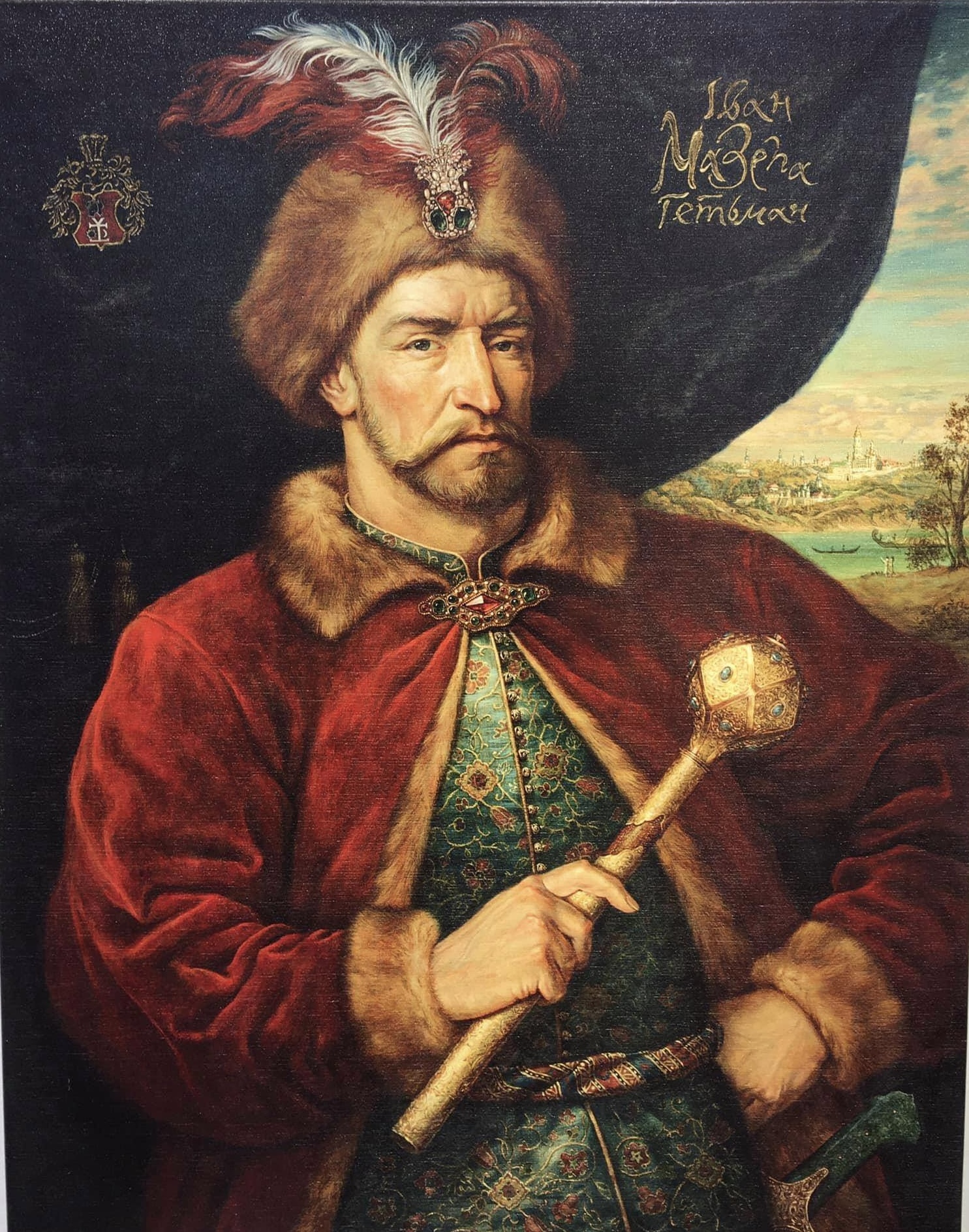
Ivan Mazepa was Hetman of the Zaporozhian Host, a statesman, diplomat, and one of the most generous benefactors of the Kyiv Cave Lavra. It was under his patronage, in the late 17th to early 18th century, that the Lavra acquired the architectural image recognized around the world today.
The defensive walls of the Upper Lavra, built around 1693–1701, are linked to Mazepa’s name. They stretched nearly 1,190 meters and united the monastery’s grounds into a single fortified ensemble. This system included towers such as the Onufriivska, the Economic, and the Ivan Kushchnyk towers.
At the hetman’s expense, the Church of All Saints was built above the Economic Gate — one of the most striking monuments of Ukrainian Baroque at the Lavra. On its facade, Mazepa’s family coat of arms, the “Kurch,” can still be seen today, restored after a long period of suppression and erasure of the hetman’s memory.
Mazepa also contributed to the renovation of the Dormition Cathedral, the Trinity Gate Church, and the St. Nicholas Hospital Church. His contribution was not limited to construction: the hetman donated precious church vessels, liturgical fabrics, bells, and other items to the Kyiv Cave Lavra, some of which are now preserved in the collection of the National Reserve.
A special place among these artifacts belongs to the “Mazepa Aer” — an embroidered liturgical cover bearing the hetman’s coat of arms, created as a votive gift for the Mazepa family. It is a rare example of 17th-century Ukrainian church embroidery and evidence of how patronage combined faith, art, and statecraft.
In 2026, a memorial marker to Ivan Mazepa was unveiled on the grounds of the Kyiv Cave Lavra. Its pedestal was made using a granite base that survived the destruction of the Dormition Cathedral in 1941, along with carved elements from the church’s iconostasis. The memorial marker became a symbol of Ivan Mazepa’s return to the Lavra, from whose history the Russian empire had tried for centuries to erase his name.